Superhuman AI. Harness once. Multiply forever.
our mission
To make machine work ordinary — so that intelligence stops being something we marvel at and becomes something the world runs on.
Taiso builds the Agent Control Platform — the governance layer that makes AI agents reliable enough for production: it enforces policy, verifies every action against evidence, escalates uncertainty to humans, and records a defensible ledger.
Superhuman AI is already here.
It reads faster than any analyst. It reasons across domains no one person holds. It drafts in minutes what used to take a week. On many bounded tasks it already matches the professional you would have hired.
And almost nothing important has been handed to it.
A brilliant demo in March. A pilot in June. By September it is still a pilot — because somewhere in between someone asked the only question that matters, how do we know it did this right?, and the honest answer was that a talented person would check.
Nothing scaled. The talented person does not scale.
A pilot nobody can trust is still a stunt. We built a barnstorming industry and convinced ourselves it was an airline.
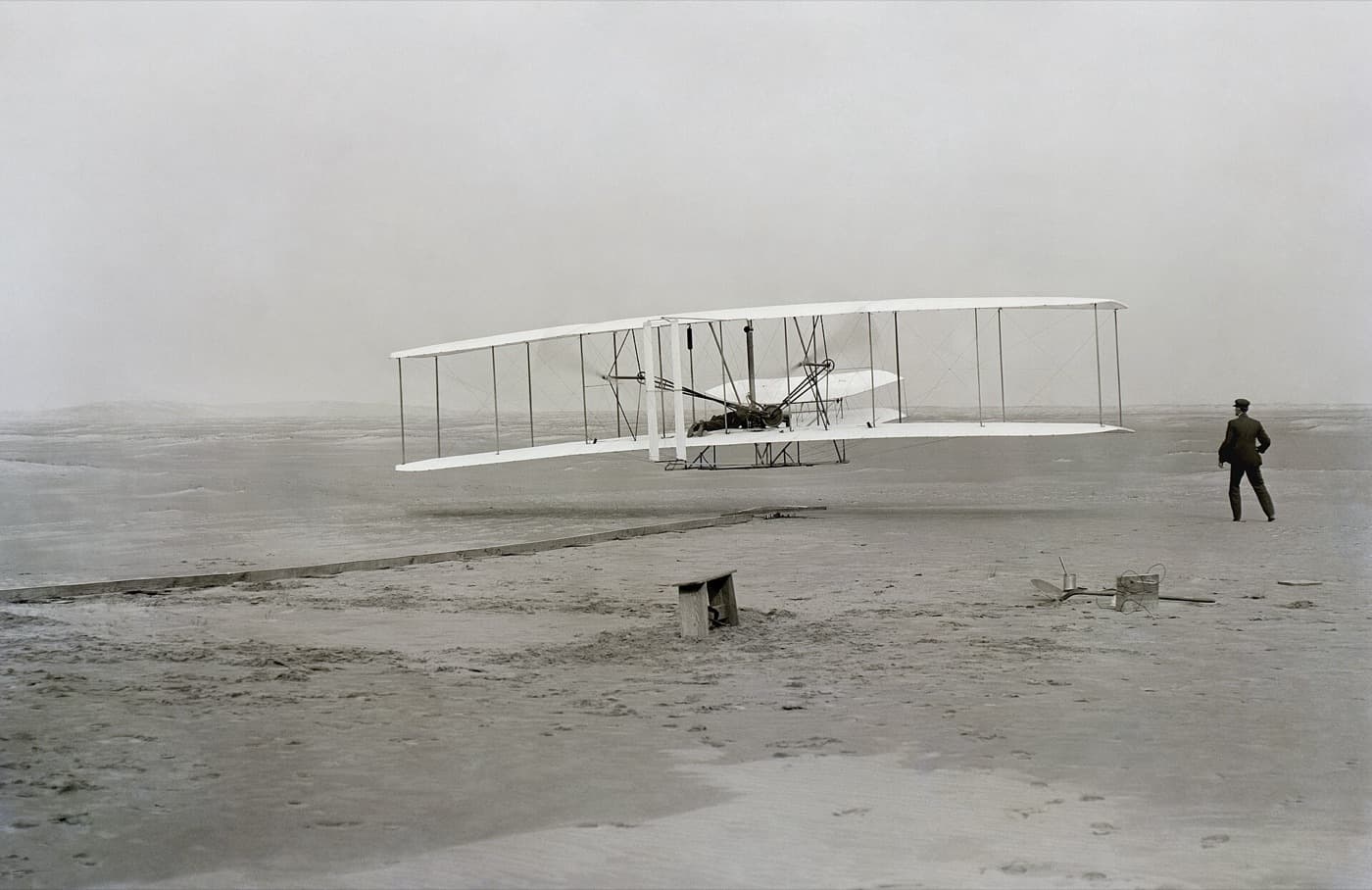
1903The race to fly was a race for power.
Bigger engines, bigger wings, more thrust. Well-funded teams were building magnificent machines and crashing them into fields. Two bicycle mechanics from Ohio won because they were solving a different problem: flight was never a power problem, it was a control problem.1 They did not build the most powerful aircraft. They built the first one a human being could steer.
Power was never the bottleneck. It still isn't.
30 October 1935 — Wright Field, Ohio
On a clear morning, Boeing's Model 299 rolled down the runway. It was the most advanced aircraft anyone had built — four engines where two was standard, more instruments than any pilot had ever flown behind, enough range to cross a war. The Army had all but decided to buy it. Three hundred men had worked on it. The future of the company was sitting on that runway.
It lifted off, climbed to three hundred feet, stalled, and fell.2
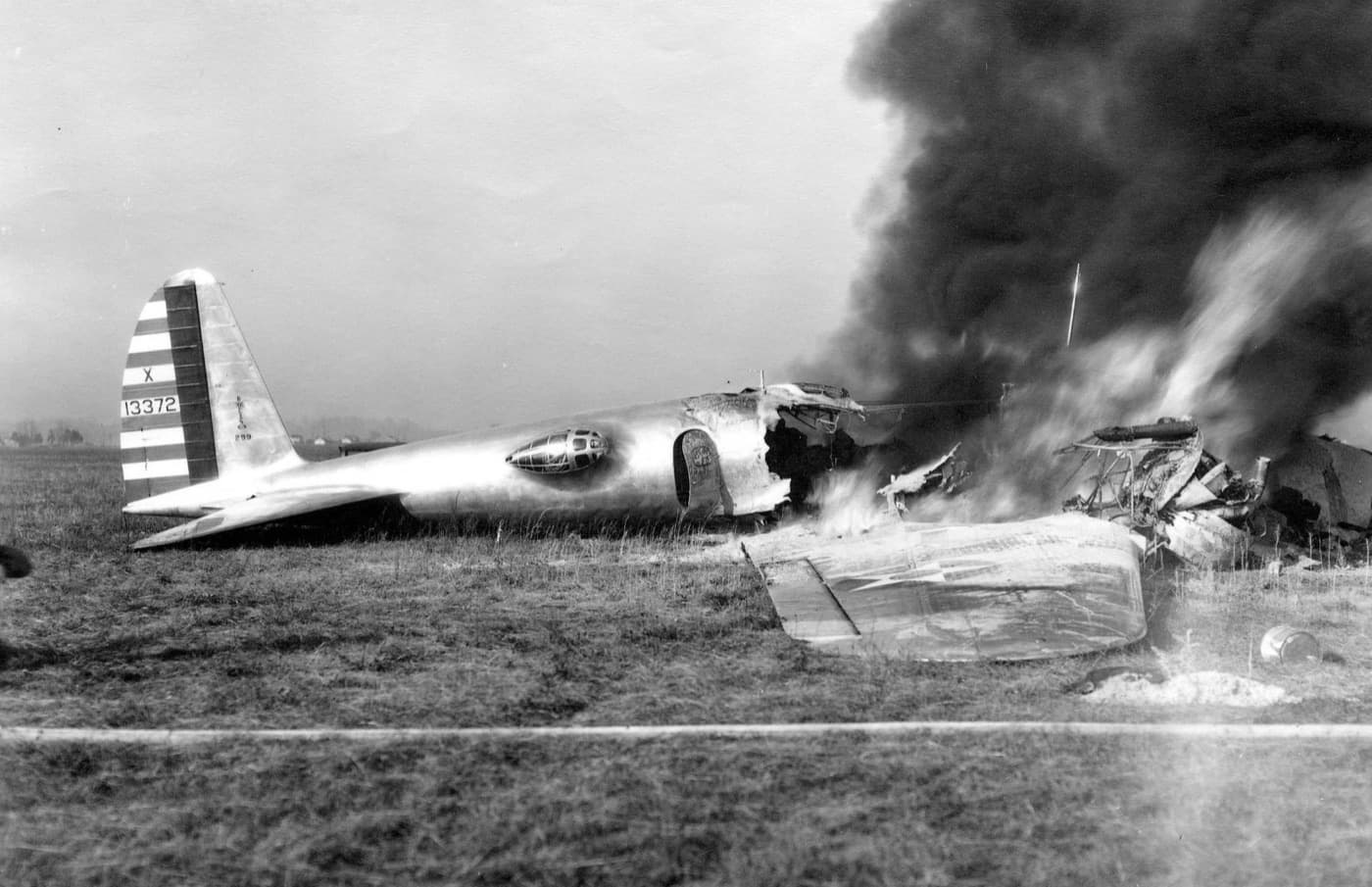
Two of the five men aboard died, including Major Ployer Hill — one of the most experienced pilots in the Air Corps. The investigation found nothing wrong with the aircraft. Nothing at all. The pilot had simply forgotten to release a lock on the elevator controls. One step, out of many, out of order.
The newspapers wrote that the Model 299 was too much airplane for one man to fly. The Army prepared to cancel the contract. And the programme would have ended there — the best aircraft of its generation abandoned as unflyable — except that a handful of Boeing engineers looked at the same wreckage and reached a different conclusion.
The plane was not too complex to fly. It was too complicated to be left to a pilot’s memory.
— the lesson boeing’s engineers drew in 1935, paraphrased
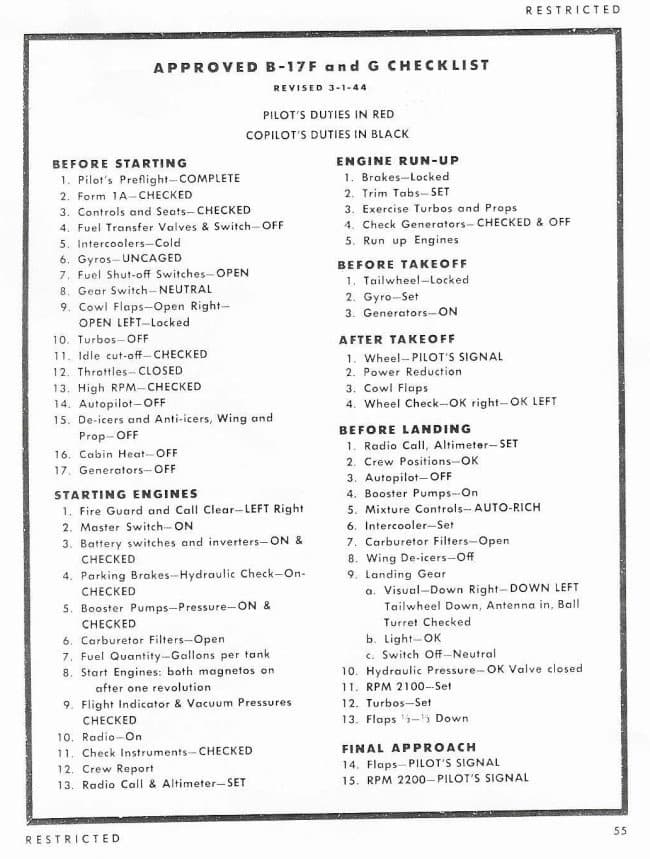
They did not simplify the aircraft. They wrote the steps down.
1,800,000
miles flown without an accident — twelve aircraft, one sheet of paper3
Written once. Paid out forever.
And here is the part everyone gets backwards.
We assume standards arrive after an industry matures — a tax on innovation, the price of growing up. Aviation's history says the opposite. The standards did not follow the industry. They created it.
Standards look like a constraint and behave like a multiplier. They took flight away from the exceptional individual and made it a property of the system. And only then — once you no longer needed a hero in the seat — did people begin boarding aircraft four billion times a year without a second thought.4
Flying did not change the world when it became impressive. It changed the world when it became ordinary.
Now look at how we deploy intelligence.
- The procedure lives in a string.
- There is no certificate saying this was tested.
- There is no flight recorder — every failure burns with the run.
- The output arrives with no indication of which parts to trust.
So a person reads all of it. And the person becomes the ceiling.
AI is too complicated to be left to a prompt.
Every one of those gaps already has a name in aviation. And an inventor. And a date. We are not short of intelligence — we are short of the apparatus that turns intelligence into work you can hand over.
What we build — not a smarter model, the apparatus.
the checklist
A procedure that is a versioned artefact instead of a prompt — identical on the thousandth run.
the certificate
Work that checks itself against its sources rather than against its own confidence.
the licence
A machine that says I could not confirm these two — and routes them to a person.5
the flight recorder
A record complete enough that in two years, when someone asks why, there is an answer.
Imagine it ordinary.
Imagine the work simply done when you wake up.
Not a draft to review from scratch — the checked thing, with the two uncertain items already flagged.
Imagine handing a process to a machine the way you hand it to a qualified colleague.
Imagine a team of twelve running an operation that used to take a department.
Imagine what a person does with the week they just got back.
Not a stunt. Not a pilot. An industry.
Superhuman AI. Harness once. Multiply forever.
appendix:
- Three-axis control. The Wrights' decisive contribution was not lift or power but control — wing-warping for roll, a rudder for yaw, an elevator for pitch. Better-funded competitors with stronger engines kept crashing. ↩
- Model 299, 30 October 1935, Wright Field. The cause was an unreleased elevator gust lock. Major Ployer Hill and Boeing's chief test pilot Leslie Tower both died. ↩
- 1,800,000 miles. Boeing and Air Corps pilots flew the initial twelve aircraft that distance without an accident, using the newly written checklist. The Army went on to order almost thirteen thousand. The Model 299 was renamed the B-17. ↩
- Four billion boardings. Approximate passenger journeys a year, drawn from pre-2020 figures; the point is the order of magnitude, not the year. ↩
- Knowing what you do not know is the first thing we ask of any professional, and the last thing current AI offers. ↩